Home Remedies For Neuropathy: The Ten-Second One He Uses
What can you do for neuropathy in your feet at 3am? The natural remedy for neuropathy in the foot he uses takes ten seconds.
Why The Soak Stops Working By Midnight
You already know what it feels like, so he skips that part. Search neuropathy symptoms and you get a list you could have written. The question worth asking is why every foot nerve pain treatment at home wears off before morning.
His answer: all of them work on the skin. Does heat help neuropathy? For an hour, the way a warm bath helps anything. The menthol, the massager, the socks somebody gave you — none of them are frauds, and none of them ever reached what is causing it.
What A Remedy Has To Get Past First
By his account a corrosive enzyme builds up around the nerve and hardens into a coating he calls sticky plaque. It eats through the protective layer and leaves the nerve exposed — an electrical wire stripped bare, in his words. In peripheral neuropathy it happens at the far ends first, which is why the feet go before the hands.
A stripped wire does not send an accurate signal. That is why the same foot can feel like it is burning and numb at once, and why it gets loud exactly when the house goes quiet.
So the only question that matters is which remedy reaches the coating. That is the entire point of the routine.
The Three Things, And Why The Order Matters
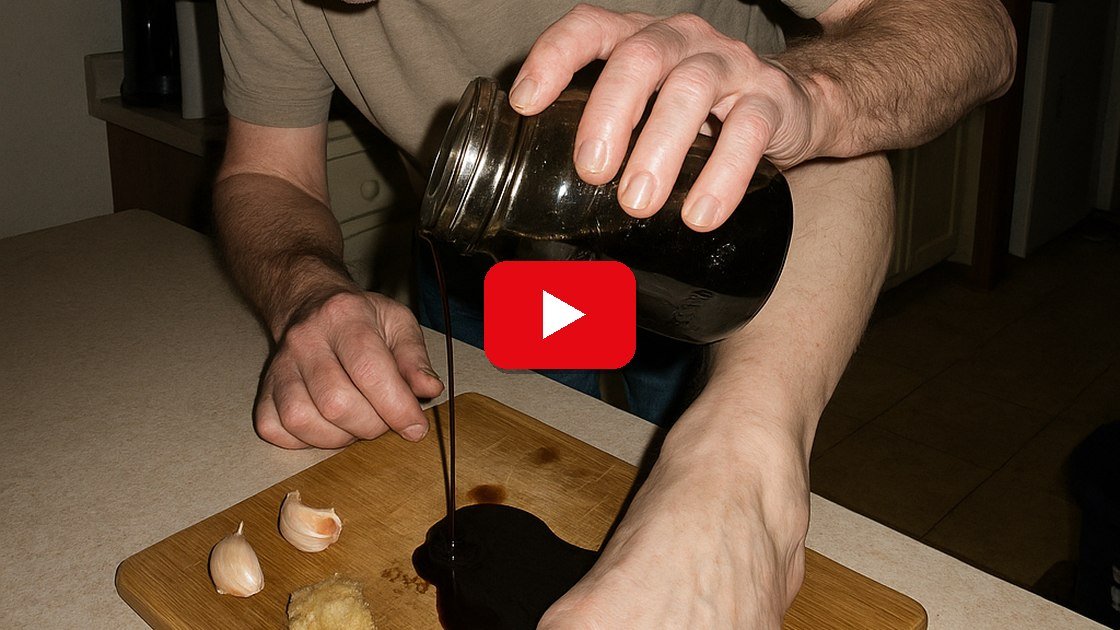
The natural remedy for neuropathy in the foot he lands on is not exotic. Three ingredients, most kitchens have them, about ten seconds. He did not invent it — he found it in the work of a researcher whose interviews keep disappearing from one platform after another.
The time he spends is on what people get wrong: the order, the proportion and the hour of the day. He is blunt that improvising it at home is why most people get nothing, and he shows the sequence instead of describing it.
He also makes a point about when to start. A nerve that has already lost its coating does not take a cold night the way an intact one does — which is why the people who write to him in the cold months outnumber every other stretch of the year. He explains the reason, and it is not the circulation answer you have been given.
And Why It Is A Doctor Saying It
He does not ask you to distrust your own doctor. He explains the incentive and uses himself as the example: for decades he took the payments attached to the same three or four prescriptions everyone with this diagnosis ends up on. He was paid to keep patients dependent while the nerve kept dying, and he says it in those words.
Keep your appointments. Keep taking what you were prescribed. He repeats that more than once. What he adds is the twenty minutes nobody in a clinic has.
What Happened To The People Who Did It
Search how I cured my neuropathy in feet and a hundred stories come back, almost none saying why it worked. The people who write to him do not claim a cure for neuropathy either. They report something smaller: that it stopped climbing, and that they finally slept.
“By day three she slept through the night for the first time in over a year. By day twenty-one she walked a full mile holding her granddaughter’s hand.” — about a 73-year-old patient, in the presentation
Seven years on the same prescription before that.
Before You Watch It
You can, and he is blunt that the people who do it that way are the ones who report nothing. The three things are ordinary. The order, the proportion and the hour of the day are what make it a ten-second routine instead of a shopping list. He does it on camera rather than describing it.
No. He says more than once to keep your appointments and keep taking what you were prescribed. His point is about what the prescription was never built to reach. He draws that line early in the presentation.
He works from the feet, because the coating forms at the far ends of the nerve first — which is why feet go before hands. Most people with both start there anyway. He shows where he applies it and why it starts there.
He makes no promise about how far along it is, and neither do we. What he does say is that a nerve which has already lost its coating behaves differently from one that has not, and that it changes what you should be doing at night. That part comes early.
Because an exposed nerve does not handle cold the way an intact one does, and the cold stretch is when he hears from the most people. It is not the circulation answer you were given. He gives the reason, and what he tells people to do about it.
No. No form, no email, no charge to watch it. It plays the moment you open the page.
Long enough that you want to be sitting down, not standing in a kitchen. The time goes on the mechanism and the order; the routine itself is at the end. If you only have a minute now, come back when you have the hour.